How Lucretia Löscher Is Betting On AI To Fix The EPC Industry's Oldest Problem
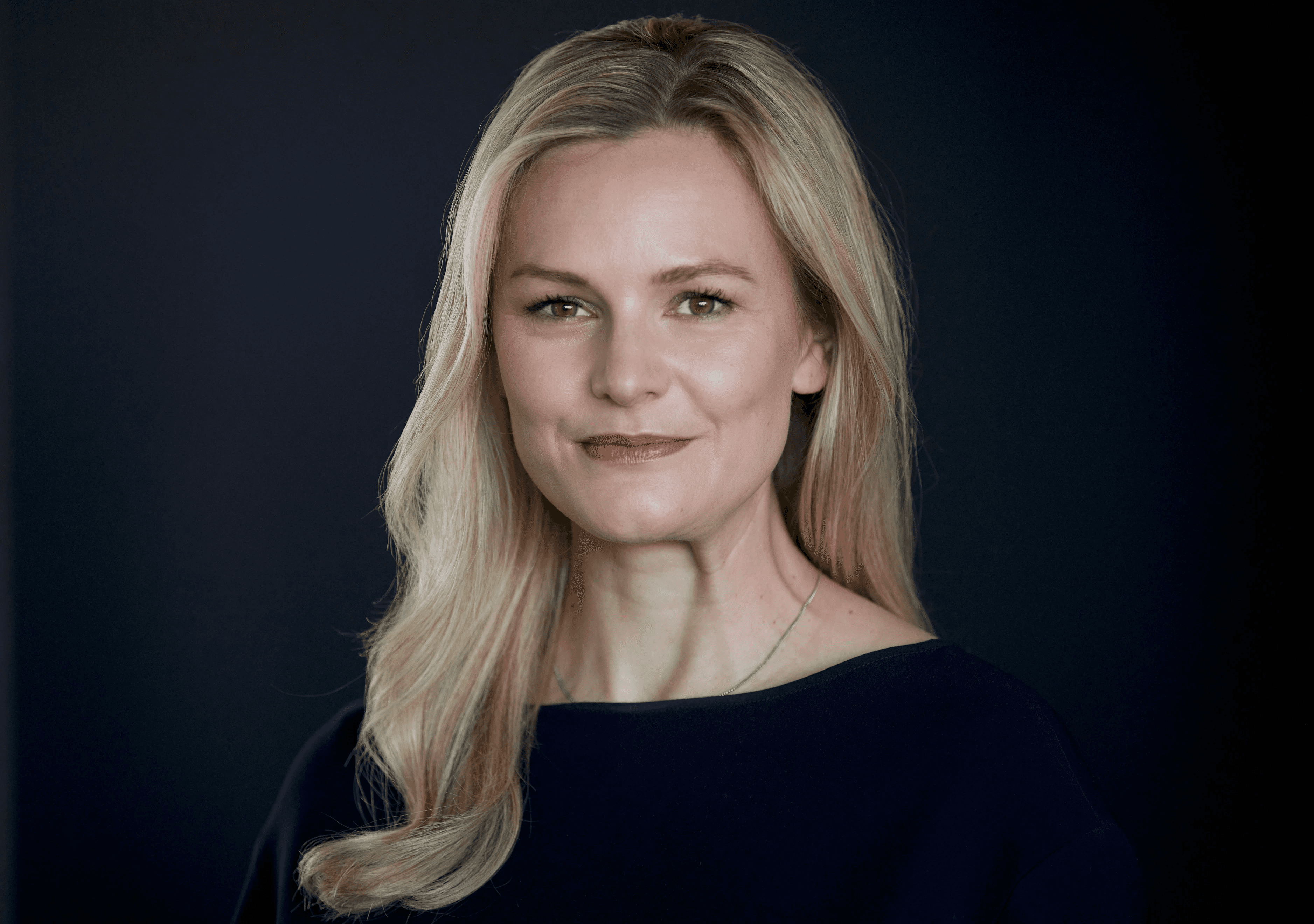
Lucretia Löscher doesn't fit the mold of a typical industrial executive. The current Chief Operating Officer of Big Dutchman, a $1.7 billion agricultural technology company, spent her early childhood behind the Berlin Wall. She later became a professional mountaineer who has summited Aconcagua in Argentina and Mount Vinson in Antarctica. More recently, she spent seven months commuting between Munich and Boston to complete an executive AI program at MIT. In the midst of all this, she also completed the Greenland crossing, a 560-kilometer ski expedition across the ice cap over 25 days. It's a feat attempted by fewer than 100 people each year.
That experience put her at the center of some of the world's largest, highest-risk capital projects, from ammonia plants to chemical facilities. A single one can run into the billions of dollars.
In a wide-ranging conversation on the Earn The Right Podcast, Löscher spoke about what a childhood in a country "not free" taught her about ambition. She discussed why boardrooms can be scarier than mountains. She also talked about how she believes artificial intelligence will reshape, but not replace, the human teams that build the world's biggest industrial projects.
Edited excerpts below.
You have an extremely inspiring story. What have been some of the key points of inflection in your life... that made you the right person to lead such a large organization and manage such important projects?
I'm from East Germany... We lived in a country that was not free, neither free to cross borders, nor did we have the freedom to speak and to say what we want. And I think in 1989 something magic happened. People, normal people like my family, my dad, my sister went on demonstrations. Although I was so young, it taught me that everything is possible, that normal people can achieve a lot. This whole element of freedom, freedom to decide what I want, freedom to study what I want, because that wouldn't have been possible in the old regime.
I'm curious how leadership and business feed from adventure sport and vice versa. What is the symbiotic relation between leadership and some of your expeditions and adventure sports?
A friend of mine took me on a small mountain. It was not a very exciting day. It was rainy. We were shivering from the cold, and we didn't even make it to the summit, but we were close to nature. I recognized the beauty of the mountains... You don't have this instant award. It requires endurance. It requires a continuous investment. And then you can also see the reward... You are super slow, you need to focus, because also your thinking is slower... your brain is constantly telling you, you don't get enough oxygen, slow down, go back. And to breathe and to continue, one step after the other, you are very close to yourself, and I enjoy this experience to focus on the moment.
To be honest, sometimes in business that's the same, right? You have a problem in front of you, you need to act quickly, you need to focus purely on the facts that are in front of you and figure out how to solve the problem. That's why I think it's actually two sides of a coin...
Any specific things that come to mind which have influenced or governed the way you've led teams in business?
Listening is probably one of the skills that is completely undervalued in business life. Sometimes you sit in these project reviews for the larger projects and while the project manager is presenting all the milestones achieved, all the challenges addressed, you still need to read between the lines and you need to be sensitive about what is not said... If you embrace trust and if people have the feeling they are safe, then they also speak up, they raise problems early... because I truly believe people come to work trying to do their best. No one comes to work and says today I want us to fail.
What have been some of the root causes that lead these projects to go over budget and over time, and derail them somehow?
There is not a single project that is executed exactly the way it is planned. Sometimes changes come from the customer due to good reasons. Sometimes changes come from us because of a design change. Sometimes the supplier tells us he's not able to manufacture in a certain way with a certain material and suggests alternatives, and then you have to adjust other parts of the design, perhaps... We have seen in the last years, not only because of COVID or some logistical challenges, but also because of loss of competency in many companies, that there was an increase in non-conformance and an increase in delayed schedules, more conflicts at customs.
I would love to hear a bit about the MIT course and the underlying motivation behind it.
It started at the beginning of last year when I got more and more messages from consultants that wanted to offer AI projects to me. I always get nervous if I have the feeling I can actually not really judge which of the offers is valuable to my company and which not... I looked up which are the programs that are the best, wanted to learn from the best, and MIT offered a seven-month senior executive program which bridged the gap between business and technology... You need to start with the problem that you try to solve. Don't start with, "oh, I have this wonderful AI here, so how can I throw it on business and help myself?" No, it's really understanding what is the problem, and then to think about what is the state in which the company is.
What are the different opportunities: what are some of the low-hanging fruits you see AI solving when it comes to the world of capital projects, executing these projects and so on?
I would perhaps start with something which is very tangible. These projects have thousands of pages of contracts. Whenever there is a change coming in, especially if it's from the customer or from the supplier, figuring out how to deal with that change... there AI can facilitate, because you have the contract, you upload the change, and the system will analyze how much of what is in the change is actually already covered by the contract or not, and what are the consequences. So a lot of paperwork can be accelerated through AI.
Another element which I find super helpful is if there are some pre-works done at the supplier, like a welding, and you want to make sure that it has the right quality, by analyzing the welding as such, for example, even with recognition with pictures that you take, and the AI compares it with an ideal welding quality, you can ensure that some hidden problems, quality problems, pop up early at the supplier site... This whole element of knowledge management is something where AI today has a lot to offer, not only to structure existing knowledge, but also because we have a lot of countries facing a demographic change where there are not enough young people to take on all the expertise from older generations, so making sure that all this knowledge, all this expertise, is captured and maintained in the company is extremely important. AI can almost job-shadow already today to capture all this knowledge.
In a lot of cases, people ask immediately: so how many people can we take out now with AI? I actually believe it is also a lot about the collaboration between the human in the loop and AI... AI comes at a cost. So in some cases a certain task may be even cheaper if it's performed by a person instead of by AI. So finding the right balance is, for me, a very important takeaway.
What's your vision: do you feel like AI can step in and transform the EPC business, reduce the risk a little, but then help increase the margin? Or what does the peak look like for you in terms of the EPC business and AI kind of coming together?
In business to consumer, we always talk about more customization with AI. I think on the business-to-business side, it is sometimes the other way around. We come from chemical plant engineering being an extremely customized way of working... What we can see and where AI can also help is twofold. I think we need to challenge the approach to have everything customized, and I can say in my last role, I'm very proud that my team identified a core of the technology where we standardize the core plant, and we're able to engage with suppliers for more standardized equipment. It's a huge support to speed up plant design, but then also procurement and the whole supply chain... Use AI to have perhaps an 80% version of it, and instead of hundreds of thousands of hours of engineering, our colleagues may only need to spend tens of thousands of hours. And that can not only reduce the cost, it can also, you talked about risk, reduce the risks, because it's much more predictable if you can pre-plan, and then you can focus on those parts that require a customized setup.
Rapid Fire
Engineering or management as a path to leadership?
Management. Engineering is as important, and you need much more expertise to develop as an engineer into the senior roles, and it takes just longer. On the management path, you are a bit faster.
Most important early-career lesson?
Companies are not thankful. People are. And it's still worth investing in companies, but don't expect anything. You get rewarded by your salary, but don't expect anything else.
Speed or precision?
Speed. Instead of having a 100% solution, sometimes 80% is good enough, and keep going.
The one signal you look for when something is about to go off track?
It's sometimes just what is not said. Not set, the lack of transparency. That's what rings an alarm bell.
What's tougher mentally: a boardroom or a mountain?
The mountain can be very challenging, but if you see the risks, you can evaluate them properly. Sometimes the boardroom is a bit more unpredictable, and that's why I would say boardroom.