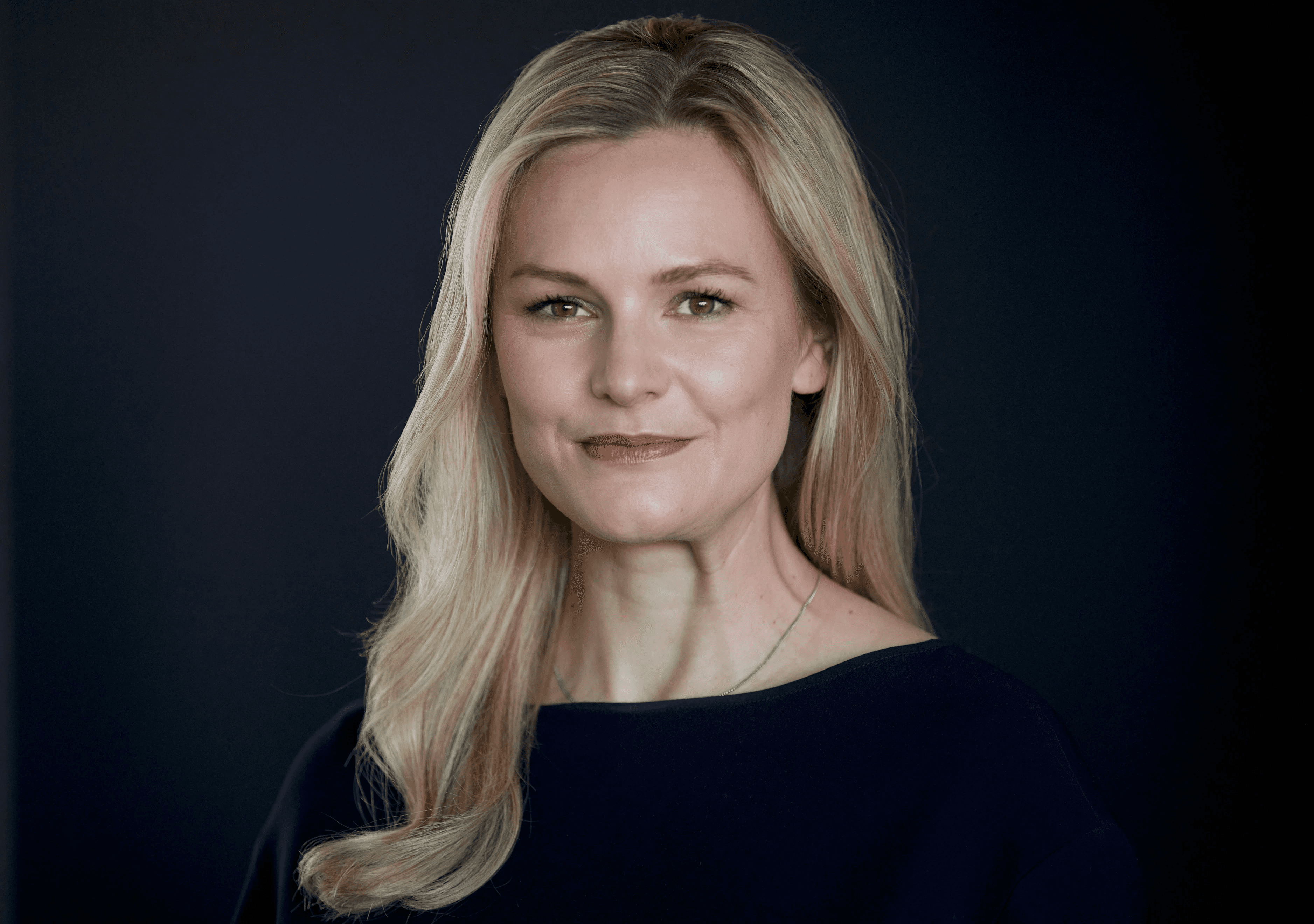
'Find What You Love. Work Will Be Way Too Hard': 5 Leadership Lessons From BP's Aleida Rios

Aleida Rios has spent more than 35 years building things most people never think about: from pipelines and plants to mega-projects that quietly power modern life. She retired as SVP and Global Head of Engineering at bp and sits on the boards of Texas A&M Engineering and the UK's Royal Academy of Engineering. For much of her career, she was the only woman in the room.
In a recent conversation on the Earn The Right Podcast, Rios traced her path to the top of one of the world's most male-dominated industries. She started on a small ranch in Tamaulipas, Mexico, where her family had no electricity or running water. Along the way, she developed a leadership philosophy shaped as much by her father's construction-site wisdom as by three decades inside bp. Here are five lessons worth borrowing.
1. Love the work before you chase the title
Rios never mapped out a plan to become a global head of engineering. Early on, she says, "I just want to survive one day at a time." What she did have was a genuine pull toward the work itself. "I always felt like being in the field, doing engineering, problem solving, working with people was something I really loved," she says. "I always tell people, find what you love. The work is going to be way too hard." Otherwise it's too hard to get up for and too hard to justify the sacrifices. Mastery, in her telling, follows love, not the other way around. "When you love something, you perform well at it. It excites you and energizes you."
2. Change a system by standing inside it
As a systems engineer by training, Rios could have moved to a less male-dominated field. She chose to stay in oil and gas instead. "I really felt that the only way you can change a system is actually to be in it, to operationalize it," she says, "because that's the only way you can actually recognize the changes that need to be made." Her advice to anyone frustrated with an institution: "Anybody that's trying to change a system needs to do it from the inside, not from the outside."
3. Process it, then move on
One of the "Four Agreements" Rios lives by, drawn from Don Miguel Ruiz's book, is not taking things personally. Working in rooms "that weren't built for her," as she puts it, she learned early not to let offense cost her a seat at the table. "If you take offense to some of those things, you might walk away from rooms that you can change," she says. Her practical fix: "I always tell myself I give myself 12 hours. That means by the next day I'm over it... because otherwise it takes power away from you."
4. Integrity and effort are non-negotiable
Two of the four agreements Rios lives by echo lessons she first learned from her father, who worked in construction: being impeccable with your word, and always doing your best. "My dad always said your words have meaning. If you say you're going to do something, I expect you to do it," she recalls. On effort, she paraphrases her father's blunt standard. If you're asked to dig a ditch, "you're going to be the best ditch digger there is." As she explains it, "It's not excellence for excellence's sake. It's excellence... because it's your integrity."
5. Leadership has invisible costs
Rios doesn't romanticize the path. "Leadership is very lonely," she says, and for women in particular, "we're expected to be strong but not intimidating... warm but not soft." She describes deliberately choosing which costs to accept and which to reject, including refusing to let her career erase her identity as a Latina, a wife, and a mother. As she puts it, "I wanted to be a wife. I wanted to be a mother. I wanted to be an engineer." She's equally direct that no one climbs alone: "None of us get where we get to alone... paying it forward and recognizing that you do that for others as well has been a big part of what my career has been about." Asked what she'd tell a young woman entering energy today, Rios didn't hesitate. "Stay. Don't leave... investment will be high, but stay."