






The Agentic Project Manager: From Risk Detection to Autonomous Action on Megaprojects

Nine out of ten megaprojects go over budget, by Bent Flyvbjerg's widely cited estimate. And the mechanism by which that overrun actually crystallizes, contract line item by contract line item, is the change order (McKinsey, summarizing Flyvbjerg, 2015). What's emerging now to directly address that mechanism is a category the industry has started calling AI project change order management. It spans more than a software flagging risky conditions and waits, but also includes the drafting of the change order. Every AI tool built for capital projects over the last five years has aimed at a narrower target: catch the condition that precedes a change order earlier, so the number is smaller and the schedule impact is shorter. That's an improvement, but it's also, in retrospect, a fairly modest one. Detecting a problem earlier still requires a person to read the alert, decide what to do about it, and go do it. Most of the value of an early warning leaks away between detection and action.
That gap is actually closing right now, and it's worth being precise about what "agentic" here means. Treating it as another label for an assistant doesn’t reflect present offerings. An assistant reads an invoice, notices it doesn't match the purchase order, and tells someone. An agent reads the same mismatch and routes it for investigation on its own (Highways Today, 2026). The industry framing that's emerged to describe the shift is blunt about what changed: earlier AI made it cheaper to produce an answer, while agentic AI makes it cheaper to take the action (Highways Today, 2026).
In May 2026, Procore launched a suite of construction AI agents built on its acquisition of the agent platform Datagrid. It had the explicit capability to act across project workflows, including invoices and payment applications, beyond flagging them for review (Highways Today, 2026).

More screens don't mean faster action.
AI Project Change Order Management
By its own announcement in June, Procore described agents that update records, generate documents, and respond automatically to project events. New RFIs, submittals, and change orders were among them (Procore, via For Construction Pros, 2026). By late July, the platform had expanded to twenty pre-built agents packaged into three tiers, covering submittal review, RFI response, contract review, and daily log processing (DeadFront.AI, 2026). This is the sharp edge of the shift where the system flags the condition and drafts the disposition.
Maker-Checker Workflows: Where the Human Stays in Control
The industry shouldn’t lose its mind about autonomy. Every serious implementation of this technology keeps a human in the loop for what’s consequential. Change order approval, procurement releases, and contract redlines run through maker-checker workflows by design. The agent drafts and proposes, a person reviews and approves, and every action is logged with a timestamped audit trail (Ampcome, 2026). It reflects a real structural fact about capital projects: they run on contractual obligations and regulatory requirements. Nobody serious can propose handing it over to a system that can't be held accountable in the way a licensed engineer or a signing authority can (Highways Today, 2026). The agent's job is only to compress the distance between a change-order condition appearing in the data and a draft sitting in front of the person authorized to approve it. The human cannot be removed from the decision.
AI Adoption Pace: From Almost None in 2024 to a Third by 2028
The pace of adoption suggests this compression is worth a great deal to the industry doing it. Gartner projects that roughly a third of enterprise software applications will carry agentic capabilities by 2028, up from almost none as recently as 2024 (Highways Today, 2026). One analysis of AI layered onto existing construction platforms found deployment timelines as short as six weeks. This includes connection to live use, with data utilization increasing 35–45% once an agent begins reading and acting on records waiting for a human to notice them. That figure comes from a single vendor's own benchmarking rather than an independent study, and should be weighted accordingly (Mirage Metrics, 2026). The pattern across every credible account of this shift is the same: the software people already use (Procore, Autodesk Construction Cloud, Primavera) isn't being replaced. What’s new is an added layer that reads, writes and notices things faster than the humans watching the same dashboards ever could.
The Agent Is Only as Reliable as the Data It Reads
The remaining constraint is the data it's acting on. An agent that drafts a change order from a mismatched invoice or a spec deviation is only as reliable as the system it's reading from. Construction data has historically lived in the silos this technology is meant to eliminate, whether they be scheduling tools that don’t talk to the document management system, or a field app that doesn't update cost tracking in real time. The platforms making the fastest progress here are layering an intelligence tier on top of Procore, Autodesk Construction Cloud, and Primavera P6. They’re reading and writing through existing APIs with row-level security intact, so the agent inherits whatever data discipline the project already has, as opposed to requiring a wholesale migration (Ampcome, 2026). That's a meaningfully lower bar to clear than replacing the system of record, which is probably why adoption has moved as quick as it has. It also means the agent's output is only ever as trustworthy as the underlying project data. This fact hasn't stopped adoption, but should temper how much autonomy any given team extends to it on day one.
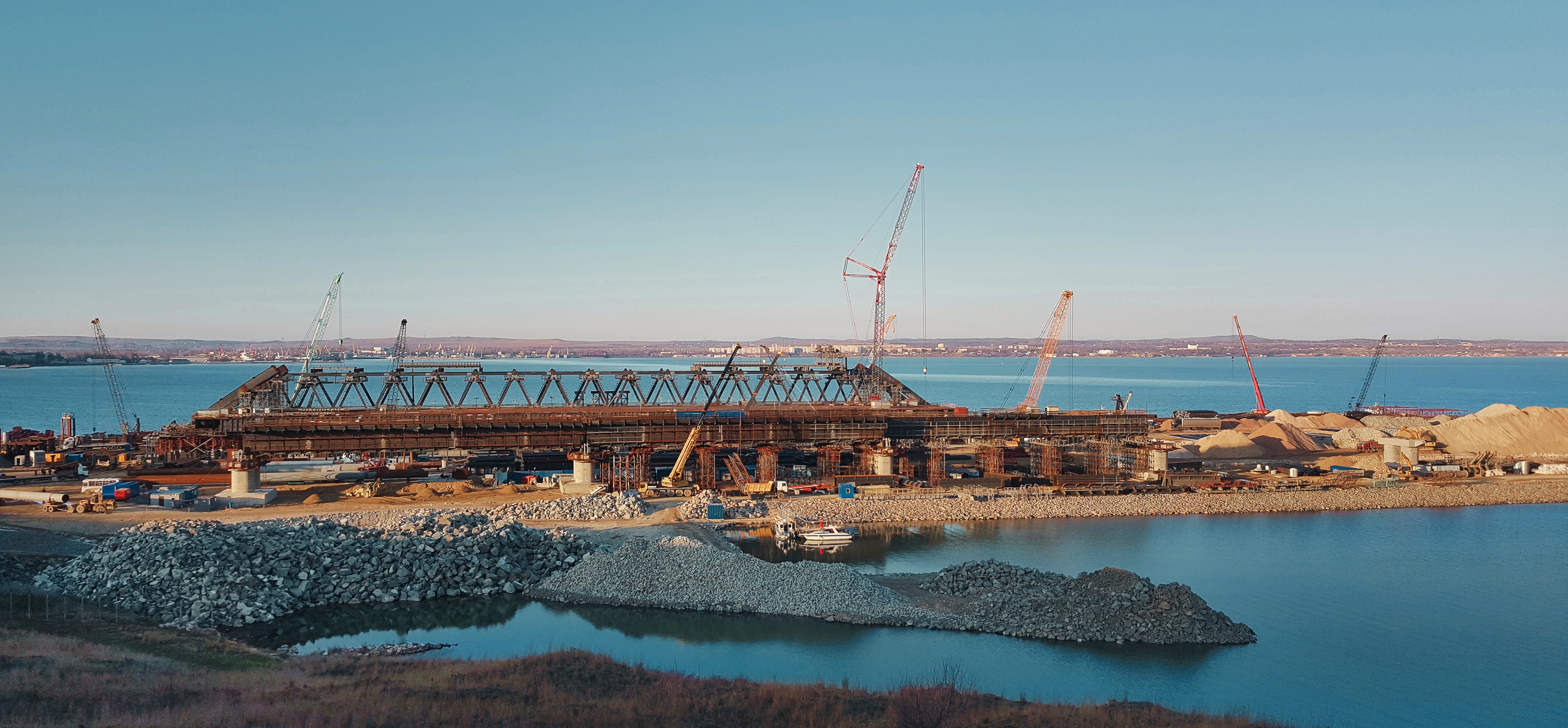
Bridges and tunnels run over budget more than roads do.
Going back to the change order math, McKinsey's review (of the Flyvbjerg dataset) puts average cost overruns on bridges and tunnels at 35%, and on roads at 20%. These are categories where the underlying contract mechanism for absorbing scope and cost changes is, overwhelmingly, the change order (McKinsey, 2015). An earlier-warning system that still takes two weeks to take action on a flagged condition doesn’t actually capture much of the available upside. This generation of tools is closing that distance of disposition with systems that turn existing conditions into drafted, ready-to-approve change orders as soon as the data shifts.
REFERENCES
[1] Garemo, Nicklas, Stefan Matzinger, and Robert Palter. "Megaprojects: The Good, the Bad, and the Better." McKinsey & Company, 2015 (summarizing Bent Flyvbjerg, "What You Should Know About Megaprojects and Why: An Overview," Project Management Journal, vol. 45, no. 2, 2014). https://www.mckinsey.com/capabilities/operations/our-insights/megaprojects-the-good-the-bad-and-the-better
[2] Highways Today. "The Autonomous Construction Company." Highways Today, August 8, 2026. https://highways.today/2026/08/08/the-autonomous-construction-company/
[3] Highways Today. "Procore Pushes Agentic AI Into the Construction Mainstream." Highways Today, May 22, 2026. https://highways.today/2026/05/22/procore-agentic-ai/
[4] Procore, via For Construction Pros. "Procore Expands AI Capabilities with New Construction-Focused Agents." For Construction Pros, June 12, 2026. https://www.forconstructionpros.com/construction-technology/project-management/product/22967792/procore-technologies-inc-procore-expands-ai-capabilities-with-new-constructionfocused-agents
[5] DeadFront.AI. "August 2026 AI Construction Roundup: Estimating Agents, Takeoff Automation, and a Busy Month for Robotics." DeadFront.AI, August 1, 2026. https://www.deadfront.ai/blog/august-2026-ai-construction-roundup
[6] Ampcome. "AI Agents for Construction Project Management: 2026 Guide." Ampcome, July 8, 2026. https://www.ampcome.com/post/ai-agents-for-construction-project-management
[7] Mirage Metrics. "AI vs Procore, Autodesk, Trimble: What Agents Do Differently." Mirage Metrics, April 30, 2026. https://miragemetrics.com/blog/ai-vs-construction-software-procore-autodesk-trimble/