






Beyond BIM: Digital Twins Are The Real Risk-Management Tool for Capital Projects

A BIM model and a digital twin are frequently used as if they were the same thing. For most of the last decade that confusion didn't cost anyone much, because the gap was treated as an academic distinction. It's now starting to, with the industry’s category requiring digital twin capital project risk management (which is different from digital twin visualization). A BIM model is updated at milestones. During design development, construction documents, coordination sets, it represents design intent over current reality. A digital twin is updated continuously, from live sensor and field data, and it represents what's actually happening on site right now (ABCTN, 2026). On a capital project running a nine-figure budget through a multi-year schedule, that bridges the difference between finding out about a problem in a Friday coordination meeting and finding out about it while there's still time to do more than absorbing the cost.
The academic literature has started naming the gap directly. A risk-informed digital twin framework published in July 2026 opens by noting that most digital twin applications in construction remain "largely descriptive." They lack the predictive and prescriptive capabilities that would let them inform a decision early rather than document it after (MDPI, 2026). A separate paper on real-time risk visualization for structural systems (given the accurate name "Risk Twin" by researchers) makes the same point from the engineering side. Most digital twin implementations are still one-directional. They remain a sensor feed flowing into a model that a person then has to interpret, while what the person needs is a bidirectional system where the model's own risk assessment feeds back into how the physical asset is monitored and managed (arXiv, 2024).
In Practice: Digital Twin Capital Project Risk
The category has a name for this shift, even if the phrase hasn't fully caught on yet outside specialist circles: Digital Twin Capital Project Risk. Outside the bounds of not a nicer 3D model, it’s a system that holds a continuously updated, quantified view of where a project's risk actually sits, and keeps that view current enough to act on.
Real-Time Monitoring: Sensors, Progress Data, and Threshold Alerts
A construction digital twin ingests IoT sensor data, progress photography, procurement status, and schedule updates. It then reconciles them against the plan in near real time rather than at the next scheduled review (MindInventory, 2026). That reconciliation is what catches an equipment clash with concrete that's already been poured, or a structural member behaving outside its expected tolerance under live load. This does not occur because someone happened to notice it on a site walk; the model is continuously comparing planned state to actual state, and flagging the delta the moment it crosses a threshold (The AEC Associates, 2025; Materialize, 2026).
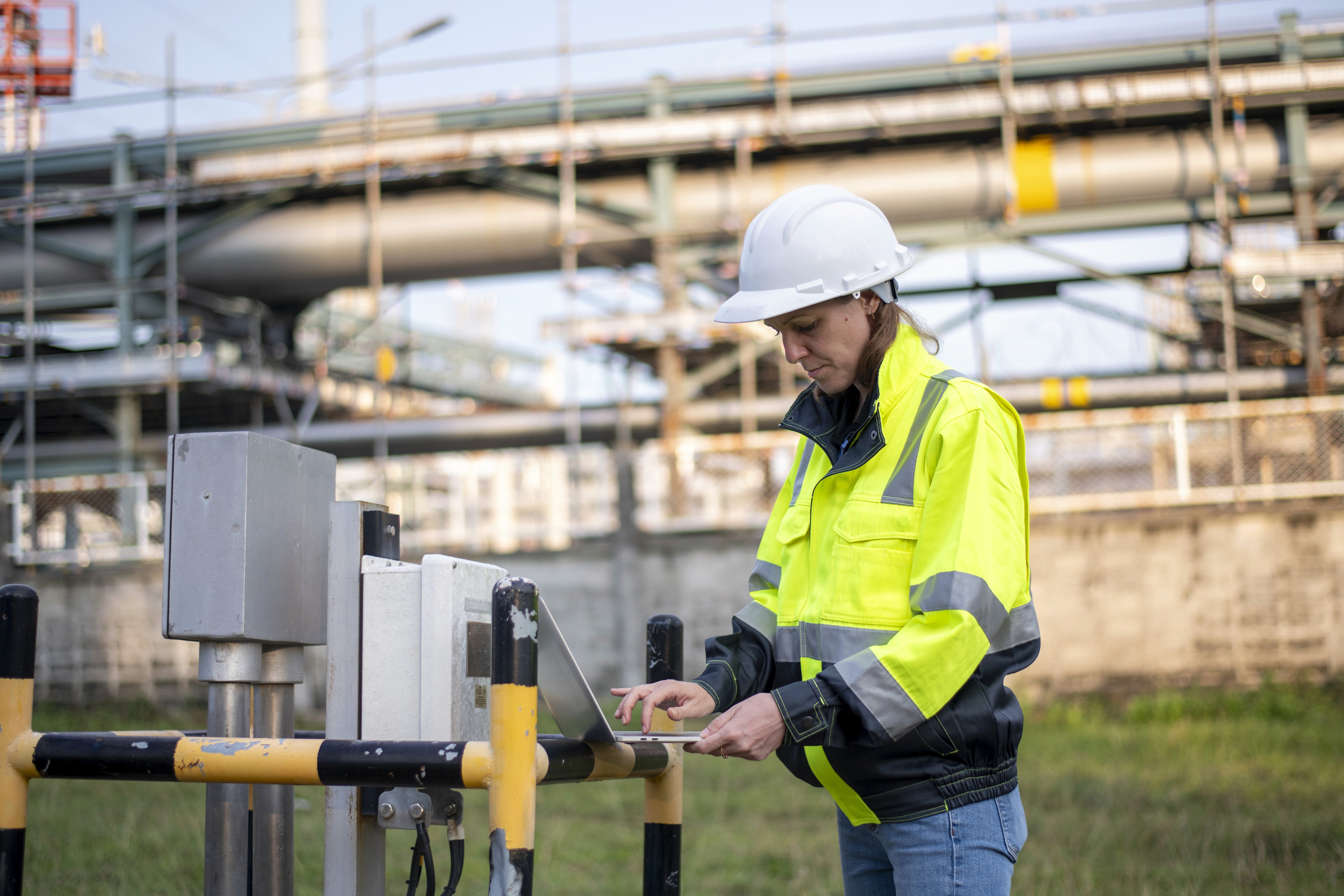
Field data feeds the model continuously.
On a bridge or a structural asset, that means tracking strain, vibration, settlement, and temperature against a model that updates its own risk posture as those readings shift. That’s a fundamental improvement upon the static inspection report filed once a quarter (Materialize, 2026).
Digital Twin Market: Estimates as Large as $328.5B
The market is scaling faster than the standards are settling. Grand View Research pegs the global digital twin market at $35.8 billion in 2025, growing to $49.5 billion in 2026 and a projected $328.5 billion by 2033. This constitutes a 31.1% compound annual growth rate (Grand View Research, via MindInventory, 2026). MarketsandMarkets, using a different methodology and a narrower construction-specific scope, estimates the construction digital twin market alone reaches $48.2 billion by 2026, up from $3.1 billion in 2020. That’s a considerably steeper 58.9% CAGR (MarketsandMarkets, via Toobler, 2026). The two estimates aren't reconciled with each other, and that's worth sitting with for a moment rather than smoothing over. Because this is a category where the market-sizing methodology itself is still unsettled. That’s usually a sign that the underlying technology adoption curve is moving faster than the analyst frameworks measuring it.
Nvidia Folds Digital Twins Into Compute and Power Design
Nvidia has started treating this as infrastructure beyond software. At GTC 2026, the company's DSX architecture explicitly folded digital-twin planning for buildings, power systems, and thermal management into the same design process as the compute infrastructure. They view AI campuses as having to be co-designed with its energy systems from the outset.
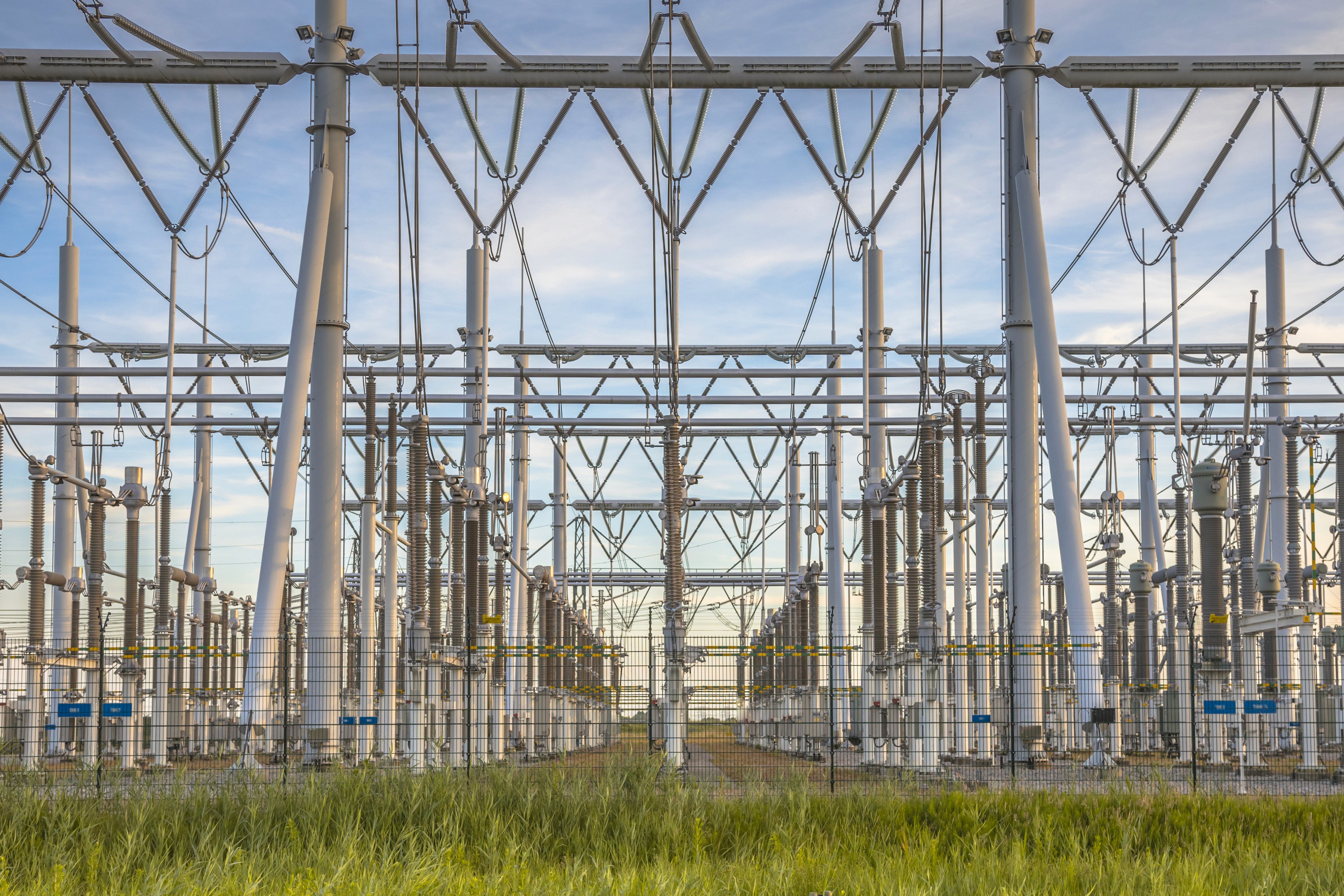
The twin enters before the transformer order, the labor plan, and the schedule are locked.
It cannot be treated as a conventional IT workload with a twin bolted on afterward (Data Center Frontier, 2025). That's a meaningfully different posture than digital twins occupied even two years ago, when they were closer to a visualization layer added late in a project's design phase. Folding the twin into the earliest design decisions (before the transformer order, before the labor plan, before the schedule is locked) is what transforms it into a tool for risk-management input.
Digital Twin ROI: What the Case Studies Actually Show
None of this is free, and the return isn't uniform. Industry case studies report schedule reductions in the 10–15% range on large projects that fully implement continuous digital twin monitoring. It’s worth noting that these figures come from vendor-reported deployments rather than independently audited studies, and should be read with appropriate skepticism (Advaiya, 2026). What's harder to dispute is the mechanism behind the claim. A model that continuously knows where actual conditions have diverged from plan can give a project team weeks of additional lead time on a decision. This saves them from solving for it too late when at the next scheduled review. On a capital project, weeks of lead time on a six-figure decision is worth pursuing even at a fraction of the headline number.
The honest caveat is that most organizations aren't there yet. Implementation guides converge on the same recommendation: start with a narrow, well-instrumented proof of concept rather than a full-site rollout. Data readiness and integration requirements, not the modeling technology itself, are what typically determine whether a digital twin program succeeds (Toobler, 2026). The fact remains that the technology to build a genuinely living risk model exists today. What’s lacking is the organizational discipline to feed it clean, continuous data at the scale generated by a capital project—while it’s still being built, project by project, out in the field.
REFERENCES
[1] ABCTN. "Digital Twins and BIM: Enhancing Efficiency in Construction Projects." ABCTN, March 1, 2026. https://abctn.org/digital-twins-and-bim-a-practical-roadmap-for-modern-construction-leaders/
[2] [Authors]. "A Risk-Informed Digital Twin Framework for Sustainable Construction Scheduling and Carbon Optimization Under Uncertainty." Sustainability (MDPI), vol. 18, no. 15, article 7599, July 26, 2026. https://www.mdpi.com/2071-1050/18/15/7599
[3] Wang, Zeyu, and Ziqi Wang. "Risk Twin: Real-time Risk Visualization and Control for Structural Systems." arXiv:2403.00283, submitted March 1, 2024, revised August 27, 2024. https://arxiv.org/abs/2403.00283
[4] MindInventory. "Digital Twin in Construction: Benefits, Use Cases, Examples." MindInventory Blog, February 3, 2026. https://www.mindinventory.com/blog/digital-twins-in-construction/
[5] The AEC Associates. "Digital Twins In Construction: Benefits And Applications For Smart Projects." The AEC Associates Blog, July 25, 2025. https://theaecassociates.com/blog/digital-twins-in-construction/
[6] Materialize. "Digital Twins in Construction: A Practical Guide to Getting Started." Materialize Blog, 2026. https://materialize.com/blog/digital-twins-in-construction/
[7] Grand View Research, via MindInventory. "Popular Digital Twin Applications & Real-World Examples." MindInventory Blog, May 11, 2026. https://www.mindinventory.com/blog/digital-twin-applications-and-real-world-examples/
[8] MarketsandMarkets, incl. Toobler implementation guidance. "What is a Digital Twin in Construction? Complete Guide." Toobler Blog, June 19, 2026. https://www.toobler.com/blog/digital-twin-in-construction
[9] Chernicoff, David. "NVIDIA and Partners Define a Repeatable Blueprint for AI Factory Data Centers." Data Center Frontier, December 17, 2025. https://www.datacenterfrontier.com/design/article/55338673/nvidia-and-partners-define-a-repeatable-blueprint-for-ai-factory-data-centers
[10] Advaiya. "Digital Twins in Construction PM." Advaiya, February 24, 2026. https://advaiya.com/how-digital-twins-transform-construction-project-management-and-control-systems/