





The AI Factory Era: Data Centers Driving the Next Industrial Revolution

A gigawatt campus of AI compute now costs roughly $38 billion to build, according to Epoch AI's total-cost-of-ownership modeling. Five facilities at that scale are scheduled to come online globally in 2026, each run by a different hyperscaler (Epoch AI, via Quartz, 2026). None of these are data centers in the sense the term meant five years ago. These facilities happen to contain servers, and the industry building them has started calling them what they are: AI factories.
The label extends beyond marketing. Nvidia CEO Jensen Huang has spent the better part of two years arguing that a data center running continuous AI inference behaves less like IT infrastructure and more like a production line. He explains this as a facility that consumes power and raw silicon on one end, and outputs tokens on the other (Data Center Frontier, 2026). Whether or not you accept the framing, the capital structure behind it agrees. Amazon, Microsoft, Google, and Meta have guided toward combined 2026 capital expenditure in the range of $600–700 billion, with the clear majority directed at AI infrastructure (Archdesk, 2026; Irecruit, 2026). McKinsey puts cumulative AI-related data center investment at $5.2 trillion by 2030 in its base case. This could lead to $7.9 trillion in the high-growth scenario (Core Insights Review, 2026).
The problem is that nobody running these projects has done one before. The playbook for a hyperscale data center, one the industry has iterated for two decades, assumes three things: a 40–500 MW facility, a conventional utility interconnection, and a construction schedule measured against comparable recent builds. The AI factory breaks every one of those assumptions simultaneously, and it is doing so at a fast pace. It has already outrun the standard risk controls capital allocators use to underwrite megaprojects.
Scale first: Meta's Hyperion gigawatt campus in Louisiana is planned at 5 GW (a footprint the company itself has compared to the island of Manhattan). Since no utility in the region could absorb that load through conventional interconnection, the site requires three dedicated natural gas power plants to run it (AI Tool Discovery, 2026).
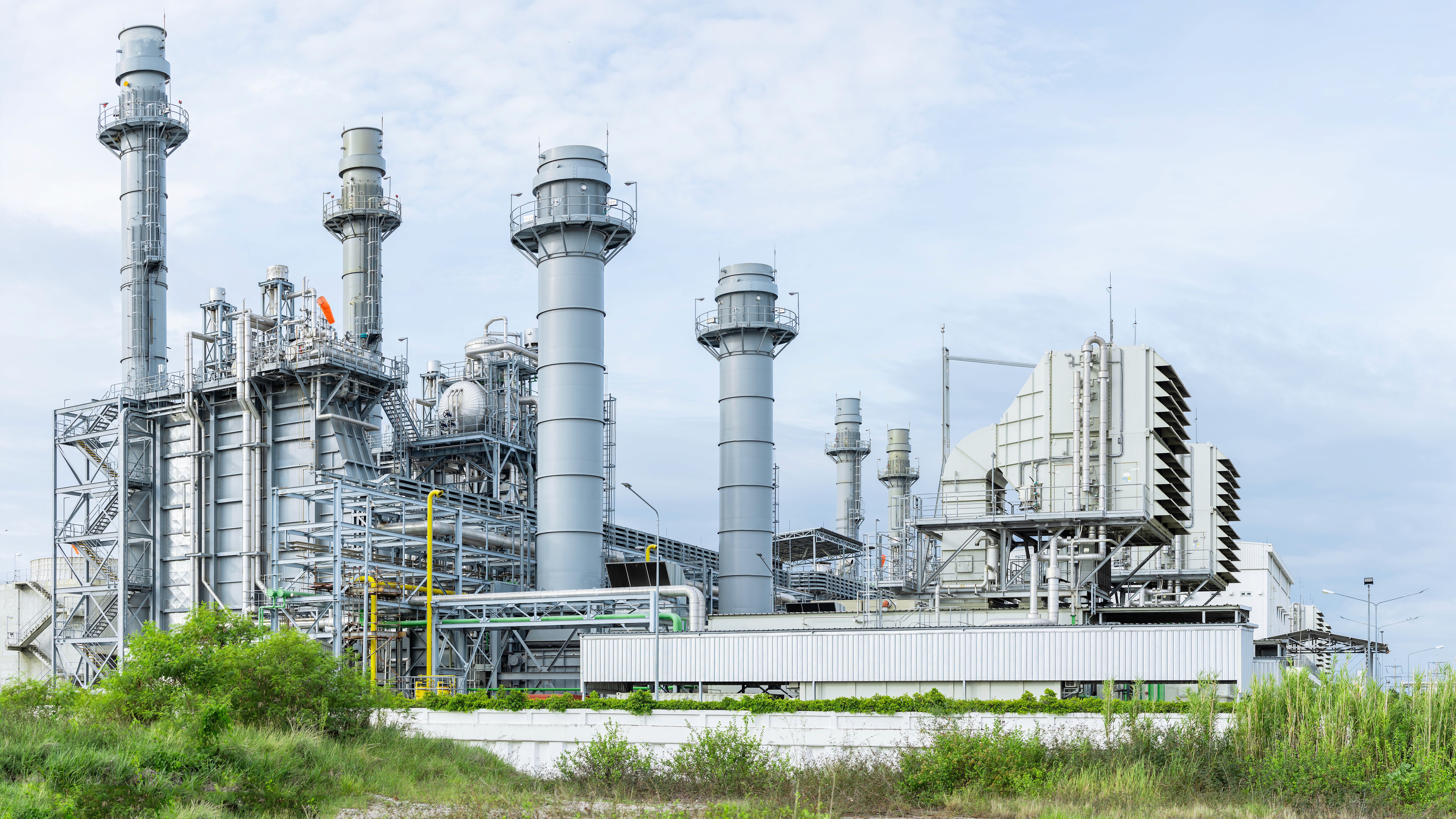
A natural gas power plant supplying industrial-scale power demand.
On the other hand, xAI's Colossus 2 in Memphis is targeting gigawatt scale within twelve months of groundbreaking. This represents a construction timeline with no real precedent in industrial power infrastructure (Epoch AI, via Quartz, 2026). When the larger picture clicks, (the median wait time for a conventional generation project, simply to clear the U.S. interconnection queue, has a backlog that peaked near 2,600 GW at the end of 2023. Even a wave of withdrawals only brought it down to roughly 2,061 GW by late 2025), the typical project still isn't reaching commercial operation for the better part of five years (Lawrence Berkeley National Laboratory, 2025).

The interconnection queue backlog peaked near 2,600 GW in 2023.
The scale of AI factory is larger than a conventional megaproject. It proceeds on a timeline of assumption: the constraint that defines every other large power project in the country simply doesn't apply to it.
Closing the Gap: Turning the Equipment Bottleneck Into a First-Mover Advantage
As AI-driven demand collides with a global manufacturing base that spent a decade underinvesting in transformer capacity, large power transformer lead times have stretched to roughly 128 weeks on average.
The 128-week wait
It constitutes up to four to five years for the largest generator step-up units (Financial Times, via AI Weekly, 2026; IndustrialSage, 2026). Demand for generator step-up transformers specifically has grown 274% since 2019 (Wood Mackenzie, via PV Magazine, 2026). Roughly half of the 12 GW of U.S. data center capacity originally planned for delivery in 2026 is now at risk of delay or cancellation for exactly this reason. Only 4–5 GW actually remain under active construction against that figure (AI Weekly, 2026). A project can have land control, a signed power purchase agreement, and a fully executed EPC contract, and still sit idle for three years waiting on a piece of steel and copper it ordered on day one.
The Skills Gap: Why Hyperscalers Are Training Their Own Workforce
Then the workforce. Data center-related job postings have roughly doubled over the past two years, and the labor shortage is now acute enough that Meta has committed $115 million to a tuition-free trade school.
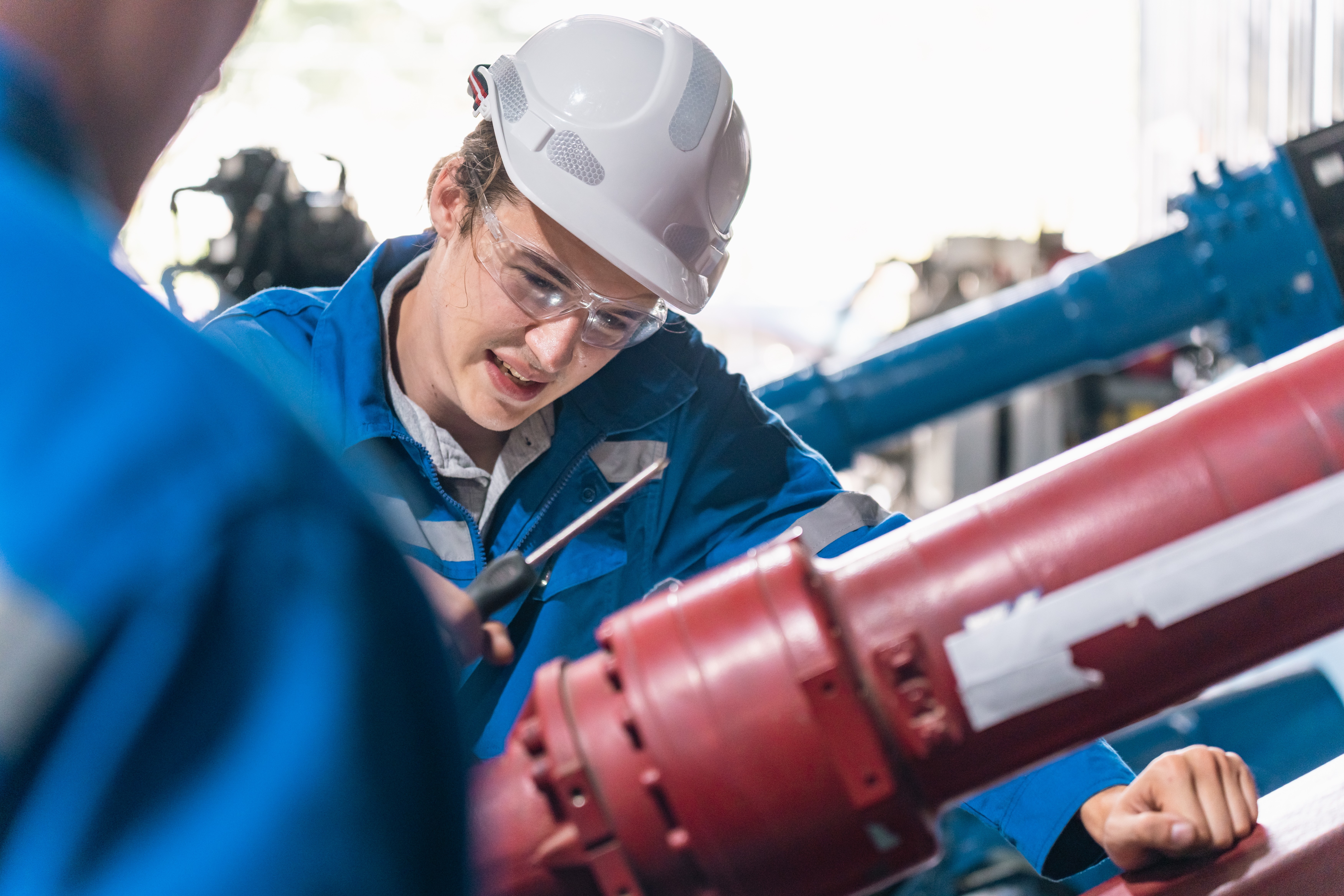
Data centers need a steady pipeline of skilled labor.
This is explicitly designed to guarantee graduates a hard-hat job on one of its data center sites (BigGo Finance, 2026). Meta’s behavior reflects a company that’s not confident in its supply chain of skilled electricians and pipefitters. It has concluded the labor market cannot produce them fast enough on its own.
And then the capital structure has to bend around all of it. To fund the 2 GW Hyperion facility alone, Meta entered a $27 billion joint venture with Blue Owl Capital. Blue Owl covered roughly 80% of the cost (Meta Investor Relations, 2025). That structure (where a hyperscaler with an investment-grade balance sheet routes construction risk at gigawatt-scale through a project-finance vehicle instead of its own books) is becoming the default, not the exception. Simply because the risk profile of an AI factory doesn't resemble the risk profile of the balance-sheet capex from before. Then, a conventional data center lease was underwritten against occupancy and tenant credit. Now, an AI factory is underwritten against equipment delivery dates, transformer allocation, and a labor pipeline that, in several U.S. markets, doesn't exist yet at the scale required. Lenders and infrastructure funds are pricing a category they may have only four quarters of real performance data on.
Europe's Full, the Middle East Is Racing to Catch Up
Geography compounds the problem rather than diversifying it. In the established European colocation markets — Frankfurt, London, Amsterdam, Paris, Dublin — vacancy has fallen to a record low of 6.3%, with 83% of the construction pipeline already pre-let (JLL EMEA, via Archdesk, 2026). That looks like healthy demand until you notice what it actually means: there is essentially no slack left in the system to absorb a schedule slip. In the Middle East, the imbalance runs the other direction. It’s roughly 2.2 GW under construction against barely 1 GW of existing capacity, with contractor mobilization capacity still racing to catch up to the pipeline (Archdesk, 2026). Every region building AI factories right now is doing so at the edge of its own project delivery capacity. This puts them in a structurally riskier position than the one occupied by the data center industry, fifteen years before ChatGPT.
None of this means the AI factory is a bad bet. Nvidia alone has disclosed roughly $500 billion in cumulative orders for its current and next-generation compute platforms through 2026. This by itself implies a multi-gigawatt construction wave across the U.S., Asia, and Europe regardless of how any single project's risk profile shakes out (Global Data Center Hub, 2025). The capital is committed and the demand signal is real. What remains missing is the operational maturity to match it. This constitutes the accumulated, boring, hard-won institutional knowledge that lets a capital allocator look at a megaproject and know, six months before the delay becomes visible, that the equipment order is slipping or the labor plan won't hold.
That knowledge doesn't exist yet for this category, because the category itself is roughly eighteen months old. On a conventional megaproject, a slipping transformer order or a thinning labor plan shows up as a schedule variance six to eighteen months before it becomes a headline. This signal lies buried in procurement data and subcontractor bench strength long before it reaches a steering committee. The AI factory generates the same signals, but it doesn't yet have anyone whose job is to read them at the speed the category is being built.
First Movers Win: Closing the Knowledge Gap
That gap will close. Every capital-intensive industrial category eventually develops its own institutional memory. It’s the instinct for which procurement delay is routine and which one is the first data point in a schedule collapse. The AI factory will get there too, probably within a construction cycle or two. The only question that matters right now, for developers signing twelve-month schedules, lenders pricing a four-year-old risk category, and hyperscalers writing checks against production dates their suppliers can't yet guarantee is: whether to build that institutional memory before the current wave of projects needs it, or after.
REFERENCES
[1] Epoch AI (data), reported by Quartz. "AI Data Centers Pass 1 Gigawatt and Strain the U.S. Power Grid." Quartz, May 2026. https://qz.com/ai-data-centers-gigawatt-power-grid-strain-051126
[2] Vincent, Matt. "Jensen Huang Maps the AI Factory Era at NVIDIA GTC 2026." Data Center Frontier, March 2026. https://www.datacenterfrontier.com/machine-learning/news/55364406/jensen-huang-maps-the-ai-factory-era-at-nvidia-gtc-2026
[3] Archdesk. "AI Data Center Construction 2026: Capex, Cost per MW, Delays." Archdesk Blog, 2026. https://archdesk.com/blog/global-ai-data-center-construction-2026
[4] Irecruit. "Hyperscale Data Center Buildout 2026: AI, Power, Talent." Irecruit Guides, June 2026. https://www.irecruit.co/guides/hyperscale-data-center-buildout
[5] Javed, Adil. "AI Data Center Development Costs in 2026: What Developers and Investors Need to Know." Core Insights Review, July 2026. https://www.coradvisors.net/2026/06/ai-data-center-development-costs-2026.html
[6] AI Tool Discovery. "Hyperscalers Explained: What They Are and How They Work." AI Tool Discovery, March 2026. https://www.aitooldiscovery.com/ai-infra/hyperscalers-explained
[7] Rand, J. et al. (Lawrence Berkeley National Laboratory). "Queued Up: Characteristics of Power Plants Seeking Transmission Interconnection." LBNL Energy Markets & Planning, 2025 update, July 2026. https://emp.lbl.gov/queues
[8] AI Weekly (summarizing Financial Times reporting). "AI Data Center Boom Blows Out Power Transformer Lead Times From Months to 4-5 Years — Half of 2026 US Capacity at Risk of Delay." AI Weekly, July 2026. https://aiweekly.co/node/5928
[9] IndustrialSage. "Power Transformer Lead Times Hit 128 Weeks in 2026." IndustrialSage, May 2026. https://www.industrialsage.com/power-transformer-lead-times-us-grid-shortage/
[10] pv magazine USA (data via Wood Mackenzie). "U.S. Transformer Market Faces Severe Supply Constraints as Lead Times Extend to Four Years." pv magazine USA, May 2026. https://pv-magazine-usa.com/2026/05/11/u-s-transformer-market-faces-severe-supply-constraints-as-lead-times-extend-to-four-years/
[11] BigGo Finance. "AWS, Meta Lead Data Center 'Modular' Revolution: Construction Timelines Slashed 36%, Cost Per Megawatt Drops 8%." BigGo Finance, June 2026. https://finance.biggo.com/news/9aff1005-1f6f-4c4e-a810-5dcf499f882d
[12] Global Data Center Hub. "19 Key Takeaways From Jensen Huang's GTC Washington Keynote." Global Data Center Hub, November 2025. https://www.globaldatacenterhub.com/p/19-key-takeaways-from-jensen-huangs
[13] Meta Platforms, Inc. "Meta Announces Joint Venture with Funds Managed by Blue Owl Capital to Develop Hyperion Data Center." Meta Investor Relations, October 21, 2025. https://investor.atmeta.com/investor-news/press-release-details/2025/Meta-Announces-Joint-Venture-with-Funds-Managed-by-Blue-Owl-Capital-to-Develop-Hyperion-Data-Center/default.aspx