



Kathy Kay: The CIO Winning the AI Race
Principal’s Kathy Kay is showing how regulated industries can move faster on AI

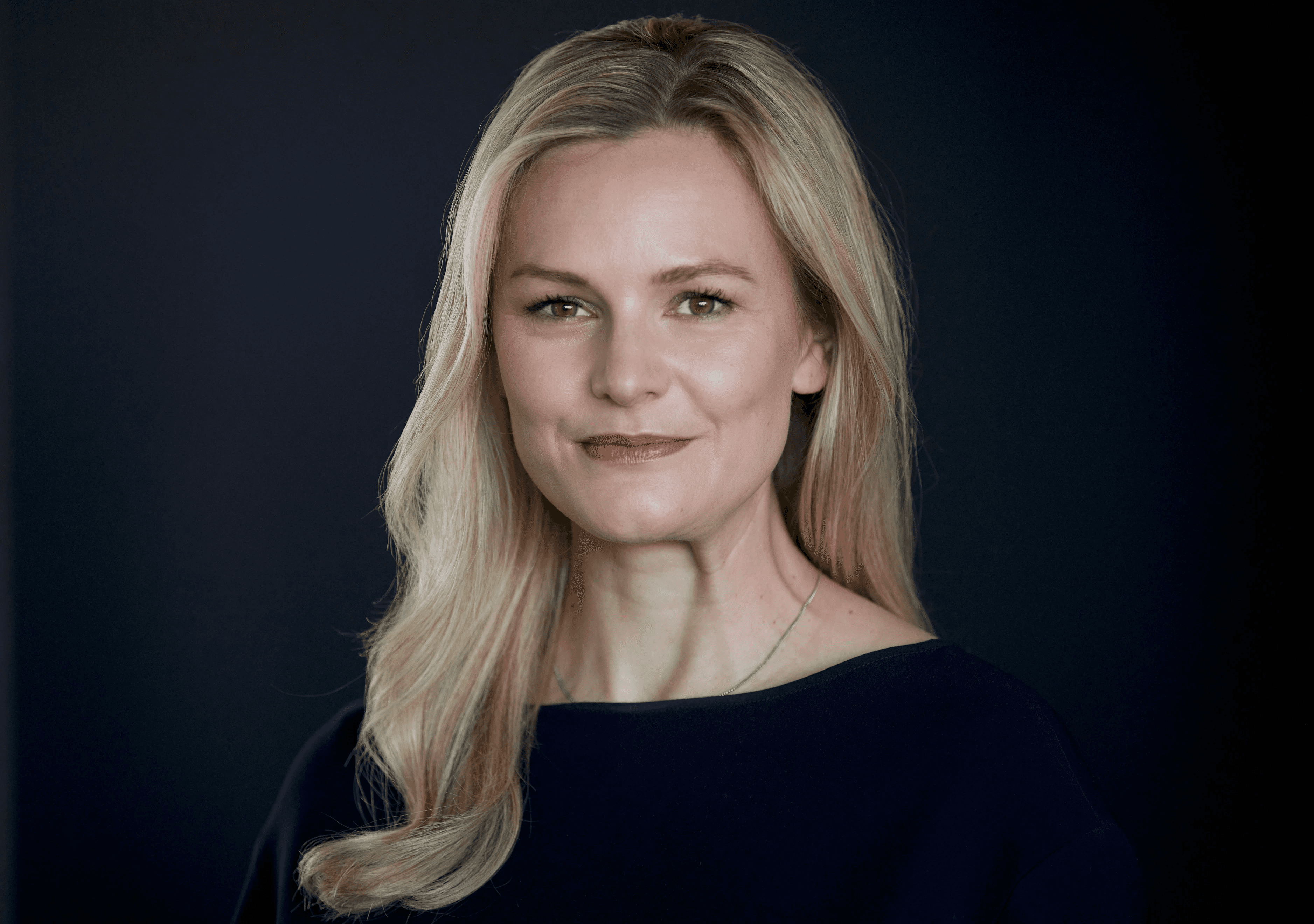
Kay says the strongest AI use cases are the ones that solve specific business problems and deliver measurable value. Photo: Principal Financial Group
Kathy Kay, Executive Vice President and Chief Information Officer of Principal Financial Group, has led technology at Fortune 500 companies including PG&E and, now, Principal. Both sit in some of the most heavily regulated, highest-stakes sectors in America: utilities and financial services.
Under Kay, Principal went from roughly 800 active AI users among its 20,000 employees to 17,000 in about a year. It began not with a mandate but with a study group open to anyone in the company, attorneys and compliance teams included. Governance was built alongside it, from the start.
In a conversation on the Earn The Right Podcast, Kay talked about how that rollout happened and why she thinks "regulated industry" is often used as an excuse not to innovate. She also spoke about the genuinely unresolved questions, like build versus buy and how to price AI agents, that she says nobody, including her, has fully figured out yet.
Edited excerpts below.
I've been following your journey with the AI transformation, and I want to know how you make it happen at a large enterprise that's highly regulated.
I have the luxury of the support of our CEO. I don't want to underestimate, though, the impact, the responsibility that we have in terms of governance. I've been in regulated industries. I think that that is an excuse for not innovating. You can still be very innovative and still comply. There are certain things where we've drawn the line to say, you know what? We're not going to touch this space right now because, A, we're all still learning. We can't guarantee certain outcomes. And so those are areas where we're just going to stay away from right now. We might do some simple automations and things... Principal has historically been known to be a very ethical and responsible company... And so it is part of our DNA as we're doing things to make sure that we are being responsible, ethical. We have the customer in mind and I'm making sure they're protected and their data is protected. And so it's natural because it's part of our culture. So we naturally kind of build these things in. So I do think it's a bit of an excuse that because you're in a regulated industry, you can't possibly use these things. As long as you're making sure you understand the risks and you're putting in the right guardrails, I think you can leverage these things effectively and get some really good outcomes.
How did you bring AI transformation within your group, and what are some of the things that weren't automated even three years ago but now are?
I'll start by saying it wasn't I. It was a lot of us, right? And so one of the things, and you've seen this with me, I'm a huge proponent of giving people an opportunity to try innovating. And so when ChatGPT first came out, we started what we called a study group. We basically opened it up to the whole company and said, whoever's interested in learning, trying, join the group, and we'll play with it for a little bit. And so what that did is, it wasn't just open to technologists, but we had a lot of business people. We had attorneys, risk, compliance, security, everybody joined. And we were learning this all together. And then people started coming up with use cases... What it enabled us to do is learn quickly as a company versus just a few. It allowed us to figure out we've got to get governance right early on, because we are a regulated organization. And we also wanted to make sure that we wouldn't do anything that would jeopardize relationships with our customers. And so by trying all this and including everybody early on, we developed governance really early, because then you don't have attorneys and the compliance teams or security. They don't want to be the no people, right? They want to enable us to leverage these things.
And in the middle of this, we also had a new CEO, Deanna Strable. I had the luxury of her being very, very bullish on the impact AI could have in our industries as well as our company... Because while this is technology, this is really about transformation. And we really need the business partners to be intimately involved. In fact, they're the ones who will come up with the best ideas... We also trained the whole company. And I think there was about eight hours of training for everybody that taught them what generative AI was, what a good prompt is, what your responsibility is with data, and what good governance is... We have 20,000 employees. At the beginning of last year, we had about 800 employees that we would say are using AI. By the end of the year, everybody had been trained. We had 17,000 active users... But I think without Deanna being front and center with advocating along with me, I don't think we would have moved as quickly.
Does the training come from your department?
In any company, if you are not working closely with your HR department regarding AI, it's a huge miss. So we co-created the training, and we did get outside help, and what I will say is, we're not done. We now are focusing on different personas, so much more specific, so think marketing and comms have a persona, obviously our engineers, finance, so we're even going deeper into educating, especially now with agents emerging, how we continue to evolve our employees' capability, but we are working very closely with HR and our training organization to do all that.
What are some of the other use cases where you've applied AI, and how has that grown over the last few years?
Across our operations, if you think about in claims, in underwriting, there's some work that is really onerous, and our employees don't like doing it, right? And so if we could give them an AI to do that part for them, they can handle the harder things. Or we've been able to teach them new skills and move them into a different role that is considered a move up... I talked a little bit about underwriting claims, providing AI assistance in our contact centers... Building a tool that allows our distribution teams to respond to RFPs [requests for proposals] more effectively, the AI will pull together, summarize a lot of information, so that, again, they still have to finalize the proposal and do the final touches, but it saves a lot of their time. We've started building tools that help assist our advisors so that they can have better conversations with our clients and, or meet with more clients than they used to be able to. On the engineering side, we've really had a focus on how our engineers can build differently, because we found that when we first gave them all a GitHub Copilot, while we would see a little lift, it's those teams that really started working differently with AI that we got our biggest lift... In asset management, we've had AIs that help with the researchers so that the investment teams have data much more quickly and effectively, so that they can react to markets much more effectively.
How do you think about build versus buy?
That line is very gray right now, and I think anybody who says they have it figured out, I don't think they do, because it keeps changing, right? One of the things that we view as very important to us is customer experience. That is something that our customers love about Principal, the relationships that we have with them, and so anything that we view as differentiating, we want to build that. We're not going to create our own LLMs [large language models], or things like that, but we might leverage maybe something very specific that we want to own ourselves. We're not going to hand that off to a partner. On other things, it's a bit of a debate right now, because there are things that could be easily built, but you always have to look at the tail. The one-time cost to build, I always say, is the cheapest part of a program, but that usually is the biggest focus. It's how much does it take to run, and keep updated, and maintenance, and especially in regulated industries, you have to make sure you're keeping up with all the regulations. On those, we're really learning use case at a time... If it's a commodity, we certainly don't want to build it ourselves, but there is this gray area now of where it's really not a commodity, but we really don't say it's truly differentiating. So we're really testing some of the things we're building just to learn, but we also are looking at partnerships as well, and technologies.
As agents or AIs do more things, the importance of when there is a human engagement becomes much more critical. And there's going to be these moments of truth. So even if you think it's a simple call, what we've learned is, with our customers, if they are making what they consider an important financial decision, they might go through the entire digital experience, but right at the end will still want to talk to a human. And so we don't necessarily view that a contact center is a commodity. It is the experience in how you are interacting with your customers on any given day... You can automate away the simple questions, right? You can automate away those things that don't really require a human interaction. But when it becomes this moment of truth for a client, you want it to be the right experience.
I think there is more flexibility now, like you don't have to make a five-year decision, right? In these times where things are changing so fast, you do have the luxury. Now, as a founder, you might not like hearing this, but maybe we don't make a three-year commitment, we make a one-year commitment, because we don't know how different things are going to be a year from now, right?... We've built some things that we've already sunset because they've sort of gone out of date or the technology's changing so fast, we don't think it's worth us trying to keep up with it.
How should we think about pricing and packaging, especially when you're buying from a third party, a startup, or another company?
It's something we've been talking a lot about too, because it's another gray area, right? It's really based on both of our ability to understand the true value creation. It's an outcome-based sort of contract, if you will. I say that because then we don't get all hung up on, what if the technology changes? Is there an upgrade? Those types of things. It also lets us be clear with each other that we really know the problem we're trying to solve. I think gone are going to be the days where companies feel comfortable paying for 100% of the capabilities, but you're only using 20 or 30% of the capabilities in that. I think those days are gone because we have the luxury of having some of these more specific AIs or types of capabilities... The thing I don't want to do and I don't want our teams to do is try and take advantage of, let's just get the cheapest price we can, because then we'll get them. That isn't sustainable for anybody. And I think just getting to understanding the right problem, understanding the right outcome, and then how do we pay a fair price? How do you get what you need in the relationship so that you can sustain your company, I think, is what's really fair.
How do you prove an outcome came from the AI and not from the human doing it better?
It's a fair question, because we even see it with some of the things we've built internally. We had built some things for our advisors, right? So we will say, oh my gosh, we're helping our business grow. They will say, it's not because of the AI. I actually am able to spend more time with the customer on this harder thing. And there starts to be this debate of who's getting the credit. And what I will always say is, does it really matter who's getting the credit? The advisor is able to do what we want. Now that's easy to say internally, but when you're trying to leverage something externally and it's hard, I see your point. I really think we're all going to have to be comfortable with trying to test different types of contracts such that, like I said, you get compensated fairly and we're getting the outcome we want.
Rapid Fire
A mistake you now share openly to build trust?
I was running this big program, and we were building this huge data warehouse. And there was just some weird political things going on and my boss called me on it and he actually took me off that project and said, you've lost your objectivity. I still believe in you, so I'm going to put you on something else. Sometimes you get so focused on delivering something or trying to get to an outcome that you do have these blind spots. Make sure you have people that you can trust that are willing to call you on it.
What's the most common mistake startups make when pitching to a CIO?
One of the things I encourage is don't think you have to go around IT. We want our teams to be successful and our company to be successful. So even though it might be easier to create that relationship with a business partner, also try and create that relationship with somebody in IT. I think it's way more effective and it allows us to understand early on what it will take to help enable it.
A leadership phrase you never want to hear again?
This is non-invasive, or it's not going to impact our users at all. It's never seamless. There's always a change involved. And so that's what I don't want to hear ever again.
An AI use case that's overhyped right now?
The fact that everybody's jobs are going to go away. If a company truly believes that their people are their strongest asset and that the way you support your customers or build those relationships are based on your employees, then automating them all the way is going to be a bad plan, I think. Automating everybody's job away is a little overhyped right now.
An AI use case that's underappreciated right now?
Saying that because you're in some sort of regulated or critical kind of role or company or industry that you for sure can't use AI. I think it's underappreciated, the true impact you could really have even in highly regulated environments.